
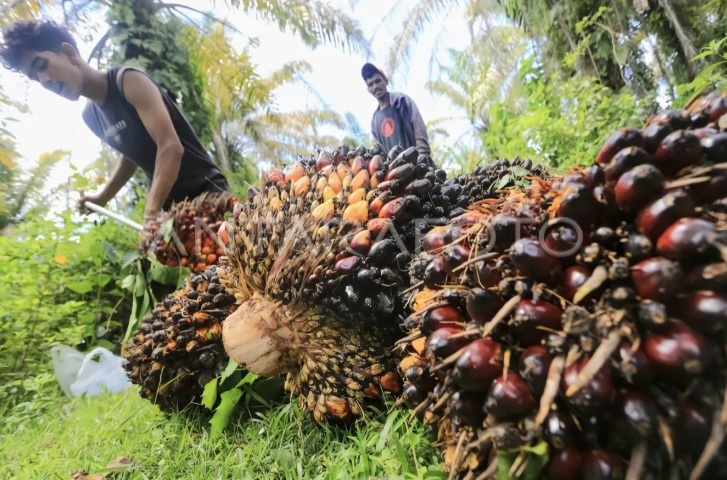
Jakarta. President Prabowo Subianto and US President Donald Trump are expected to sign a landmark reciprocal trade agreement within the next month, a deal welcomed by Indonesian businesses but seen as falling short of broader tariff relief.
Under the latest round of negotiations, the United States agreed to allow Indonesian palm oil to enter its market tariff-free. The Trump administration had earlier rolled back tariffs on cocoa and coffee export through an executive order issued in November.
Coordinating Economic Affairs Minister Airlangga Hartarto, who led Indonesia’s negotiating team, has said there were no major changes from the terms agreed by both governments in July.
The deal is widely seen as a win for the palm oil industry. Indonesia controls about 89% of the US palm oil market, with Malaysia as its main competitor. Malaysian palm oil has entered the US market tariff-free since October, while a 19% tariff on Indonesian palm oil officially took effect on Aug. 7.
The Indonesian Palm Oil Association (Gapki) said the higher tariffs had not significantly affected shipments to the US, as recent exports were likely based on contracts signed before the duty increase.
“If the US truly lowers Indonesia’s palm oil export tariffs to zero, it will clearly boost our exports, which have risen over the past five years despite a slight decline in 2024,” Gapki chairman Eddy Martono said, noting that palm oil prices outperformed other vegetable oils last year.
Gapki reported that Indonesia exported 2.5 million tons of palm oil to the US in 2023, with shipments easing to 2.3 million tons in 2024. The association did not disclose export values.
Senior economist Tauhid Ahmad of the INDEF said tariff exemptions for key agricultural products would help Indonesia compete on a more level playing field, as rival exporters already enjoy zero tariffs.
“Securing similar treatment for manufactured goods will be far more difficult, but it is something Jakarta should pursue gradually,” he said
Indonesia reported that bilateral trade with the US reached nearly $36.2 billion in January–October 2025. Electrical machinery and equipment accounted for the largest share of exports at $4.9 billion, followed by knitted apparel worth $2.3 billion.
Under the deal, the Trump administration cut proposed tariffs on Indonesian goods from an initial 32% to 19%, in exchange for Jakarta removing 99% of tariff barriers on US agrifood and industrial products and committing to purchases of American energy commodities.
If you want to order Indonesian Palm Oil, you can order at Indonesian-Product.com .